
Facts about Hoverflies volume 3:
Hoverfly Lifecycle: from egg to adult, exploring stages, choices they make along the way, timelines, and unique lifestyles.

Just like butterflies and moths, a hoverfly’s life begins as an egg. From there, it’s quite a journey: egg, larva, pupa, and finally adult. Along the way, the larva goes through three growth stages (called instars), each one a bit bigger than the last, before pupating and undergoing its remarkable transformation, metamorphosing into an adult. You can follow this process in the diagram below.
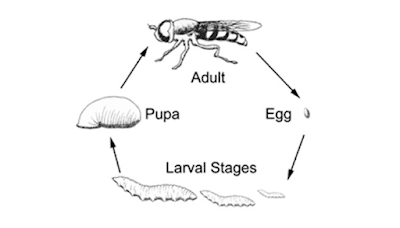
Once laid, a hoverfly egg can take anything from three days to a couple of weeks to hatch. At first glance eggs may look fragile, but they’re actually well protected. They’re coated in a waterproof layer called the chorion, which prevents them from drying out or drowning while still allowing oxygen to pass in and waste gases to escape. The female also coats the egg in a sticky adhesive, making sure it stays exactly where she intended to lay it.
When the eggs hatch, the larvae emerge as legless, blind maggots with no obvious head. They might not look very impressive, but they have one feature that gives them away: two fused breathing tubes sticking out from the rear end. This is unique to hoverfly larvae and helps with identification.
Some larvae have taken disguise to the next level. A few species even resemble bird droppings — an effective bit of mimicry that helps them avoid being eaten themselves.
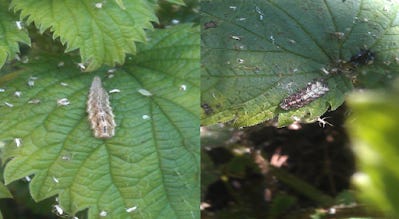
A larva that eats aphids is termed aphidophagus. Because they can’t see, they rely on their sense of touch and chemical cues to locate prey. Once they find an aphid, they use sharp mouth hooks to pierce its skin, and hold the aphid aloft from the plant so that any chemical alert released from the aphid gets carried away in the wind. All in all, a single larva can get through an impressive 400 aphids before becoming an adult.
If you are enjoying this article or any of the others on this site, then please consider subscribing, it’s totally free. It really does help the channel grow.
Easily Distracted by Hoverflies is a self-funded labour of love and every donation contributes to research and maintenance expenses. Your generosity is greatly appreciated, thank you very much!
Not all hoverfly larvae eat aphids, though. Some species are herbivorous, feeding on plant material such as bulbs or dead wood. Others are detritivores, helping break down decaying matter. Together, they play a surprisingly wide range of ecological roles.
Then there are the truly cunning ones. Species in the genus Volucella lay their eggs inside hornet and wasp nests. The larvae hatch but remain hidden and largely inactive, lying low until autumn. Once the adult wasps or hornets (members of the Hymenoptera) die off, the hoverfly larvae become active, feeding on nest debris and any unprotected grubs left behind. It’s gruesome but clever — they avoid being eaten themselves and end up with an all‑you‑can‑eat buffet.
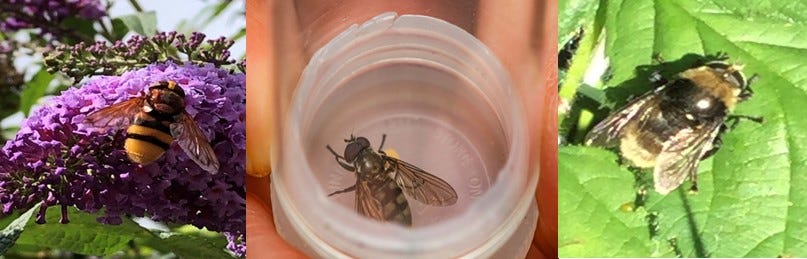
In the bulb specific hoverfly species such as Narcissus Bulb Hoverfly (Merodon equestris) and Ransom Hoverfly (Portevina maculata), they have another interesting trick. Their first larva tunnel into the bulbs and overwinter in a state of diapause (a state of suspended development allowing them to pause until more favourable conditions). In late winter they awaken, start feeding and growing, at the same time as the plants are mobilising their resources for growth in spring.
For all hoverflies at the end of each larval stage, the larva sheds its outer skin so it can grow larger. This process is called ecdysis, and it happens three times before pupation.
By the third instar, the larva faces an important decision: whether to remain in diapause or switch on genes that allow it to migrate. Migratory larvae go on to develop into adults with larger wings and other adaptations that let them fly at higher altitudes. All of this decision‑making happens before they even pupate. Amazing!
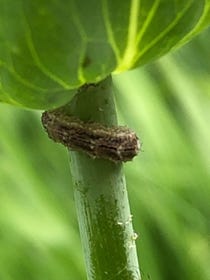
Once the three larval stages are completed the larva pupates, most moving to a dry sheltered place to do this. I have often seen them on blades of vegetation, but those that overwinter will head for the soil/leaf litter. Hoverfly larva that are aquatic will climb out of the water to pupate, which is why it’s important that in man-made hoverfly lagoons, there are some twigs they can climb onto which lead out of the container. Aquatic hoverfly larvae are a subject worthy of its own post, so will return to this at some future date.
The pupa itself is a teardrop‑shaped case made from the hardened skin of the final larval stage. Inside, the larva completely reorganises itself, eventually emerging as an adult hoverfly when the environmental conditions are just right.
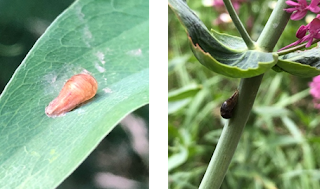
From egg to adult, the hoverfly life cycle can take as little as 20 days, or stretch over several weeks — and sometimes much longer. Development can be delayed or paused altogether, allowing hoverflies to time their emergence to suit the conditions they’ll face as adults.
Summary
Below is an example of a very short hoverfly timeline, most are longer.
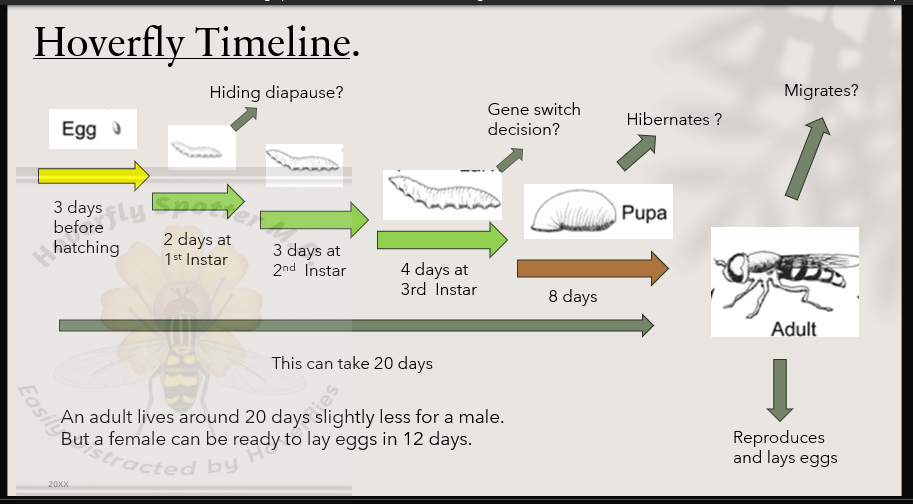
As you can see, a hoverfly’s life cycle involves far more than simply growing up. It’s full of choices, adaptations and clever strategies along the way.
If you have any questions I haven’t covered, please do drop me a line — I’d love to hear them.
A short but well-lived life!
Absolutely fascinating read. Thanks Mark :-)